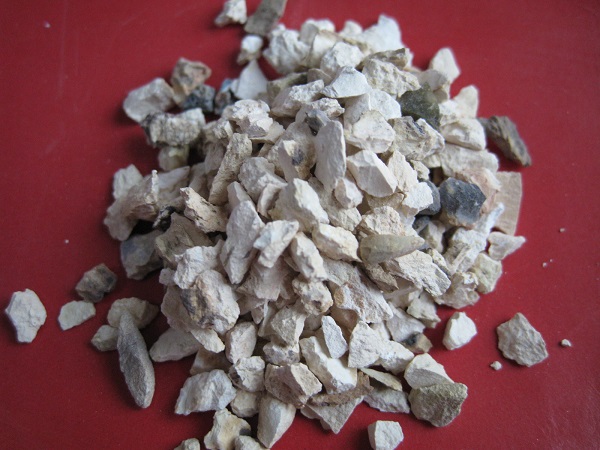
Bauxite
Introduction of bauxite
Bauxite (bauxite), also known as bauxite or bauxite, is mainly composed of alumina, a hydrated alumina containing impurities, which is a kind of earthy mineral. White or gray white, brown yellow or light red due to iron content. Density 3.45g/cm3, hardness 1-3, opaque, brittle. Very difficult to melt. Insoluble in water, soluble in sulfuric acid and sodium hydroxide solution. It is mainly used for aluminum smelting and refractory making.
China is rich in bauxite resources. 205 bauxite producing areas have been identified in 18 provinces, autonomous regions and municipalities directly under the central government, including 72 large-scale producing areas (excluding Taiwan). Mainly distributed in Shanxi, Shandong, Hebei, Henan, Guizhou, Sichuan, Guangxi, Liaoning, Hunan and other places.
As the additive material of sintering flux, the ore in Henan area is mainly used. The ore vein is mainly distributed in Luoyang, Zhengzhou and other places. Compared with Shanxi material, the density is lower. Bauxite produced in Shanxi is more widely used in refractories.
Conventional production granularity of bauxite
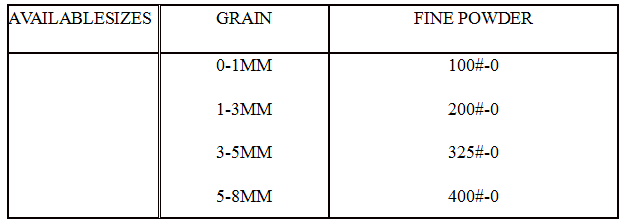
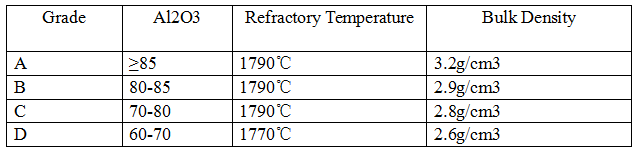
Main physical properties:
Application:
1、Aluminum smelting
2、Precision casting
3、Refractory products
4、Grinding materials
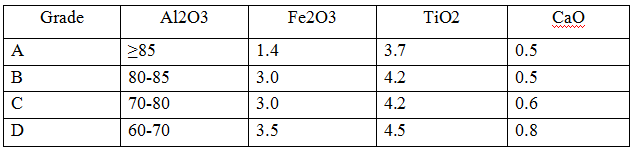
Chemical compositions:


Link man:
Henry Hu

Phone:
0086 15890627213

Email:
admin@hnsicheng.cn

Address:
#1903,yaxin times square,songshan south road,Zhengzhou ,China
link:
WeChat


